
How to Solve the Faraday Cage Effect in Powder Coating Deep Corners
Deep corners and recessed areas are where many powder coating jobs fail first. A flat panel may look perfect, while the inside of a tube joint, box section, weld corner, or equipment frame still shows thin film build, rough texture, or bare metal. For coating shops and fabricators, this usually means extra touch-up work, slower production, and a higher risk of corrosion complaints after delivery.
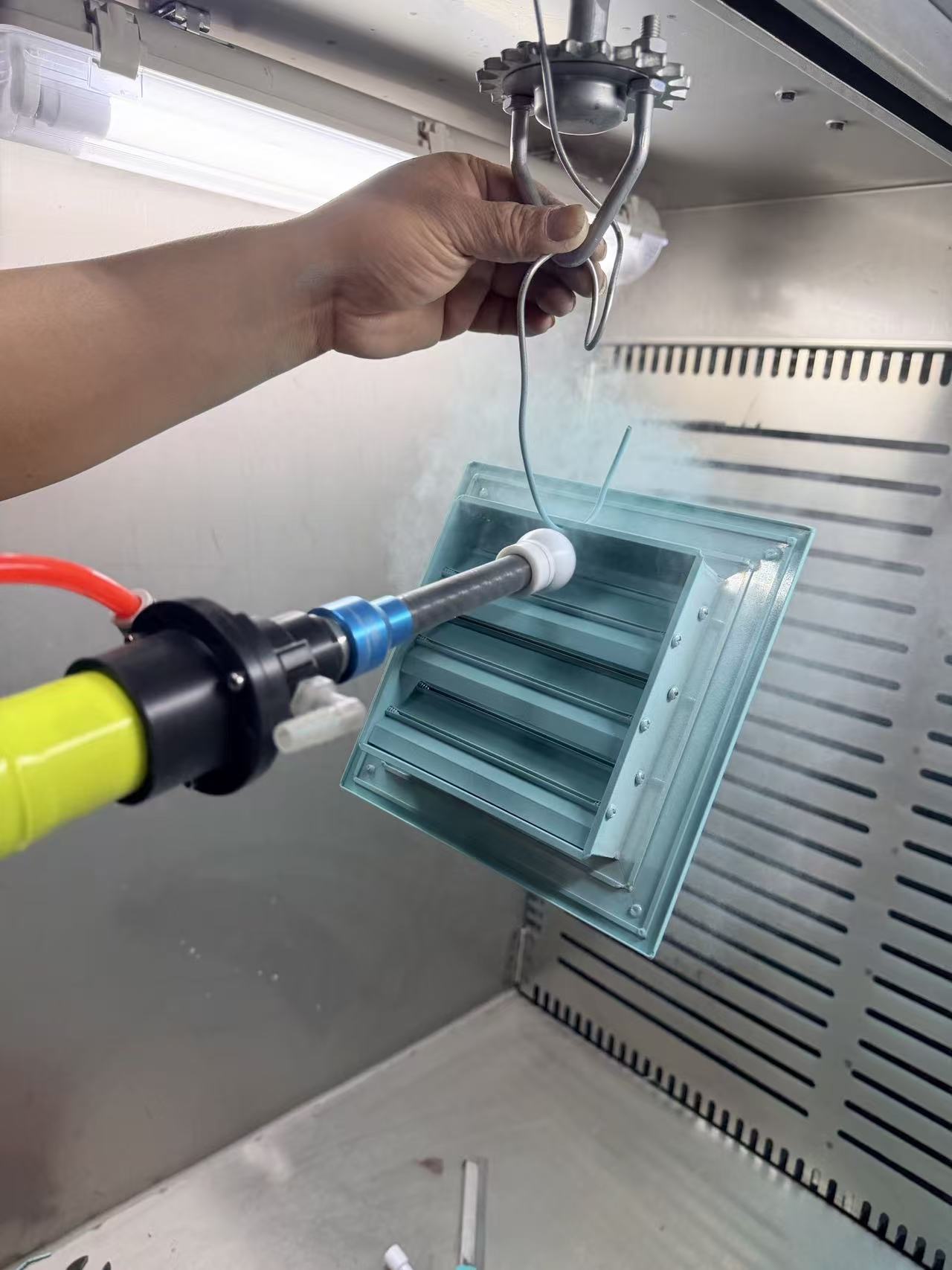
The main reason is the Faraday cage effect. In electrostatic powder coating, charged powder particles naturally follow electric field lines toward the easiest exposed surfaces. When a part has a deep corner or narrow recess, the electric field tends to wrap around the outer edges instead of pulling powder into the deepest area. The operator sees powder building up around the entrance of the corner, but the inside remains undercoated.
Why Deep Corners Are So Difficult to Powder Coat
Deep corners create three problems at the same time: limited access, distorted electric field, and poor powder cloud movement. A conventional corona powder gun can charge powder effectively, but it still depends heavily on airflow direction and line-of-sight spraying. Once the powder cloud reaches the mouth of a recess, much of it lands on the high-field outer edge instead of continuing into the corner.
This is why operators often see the same defects on complex parts:
- Bare spots at the bottom of internal corners
- Thin film build around tube intersections and welded joints
- Heavy powder buildup on outer edges while the recess remains light
- Orange peel or back-ionization after trying to force more powder into the area
- Extra rework because the first pass does not meet coverage requirements
Common Parts Affected by the Faraday Cage Effect
The Faraday cage effect is not limited to one industry. It appears anywhere the part shape creates deep corners, internal cavities, or narrow channels. Typical examples include:
- Welded tube frames for chairs, carts, gates, and railings
- Square tube structures with internal 90-degree corners
- Machine guards, equipment frames, and industrial brackets
- Automotive frames, roll cages, and motorcycle parts
- Aluminum profiles with grooves, slots, and recessed sections
- Sheet metal boxes, folded parts, and welded assemblies
These parts are often high-value products where corrosion resistance and visual finish both matter. If the coating is weak in the corners, the entire part can fail quality inspection even when the exposed surfaces look acceptable.
Why Increasing Voltage or Powder Output Often Makes It Worse
A common reaction is to raise voltage, increase powder output, or slow down spraying. Sometimes this helps slightly, but it can also create new defects. Higher voltage strengthens the electric field around the outer edges, which can make powder even less willing to enter the recess. More powder output can overload the visible surfaces while the deepest point still remains thin.
When operators push too hard, they may also trigger back-ionization. The result can be orange peel, pinholes, rough texture, or star-shaped defects. In other words, the shop uses more powder and more time, but still does not get reliable coverage in the area that matters most.
Better Process Adjustments for Recessed Areas
Before changing equipment, a coating shop can improve results by adjusting technique and process settings. Useful steps include:
- Lowering voltage when approaching deep recesses
- Reducing powder output to avoid overloading the outer edge
- Changing spray angle so the powder cloud approaches the corner from multiple directions
- Using slower, controlled passes around the deepest geometry
- Checking grounding quality so the part attracts powder evenly
- Testing film thickness inside the recess, not only on the visible outside surface
These adjustments can reduce defects, but they still depend heavily on operator skill. For repeat production or complex welded parts, many shops need a more stable way to move powder into difficult geometry.
How Rotary Cup Atomization Helps Solve Deep-Corner Coverage
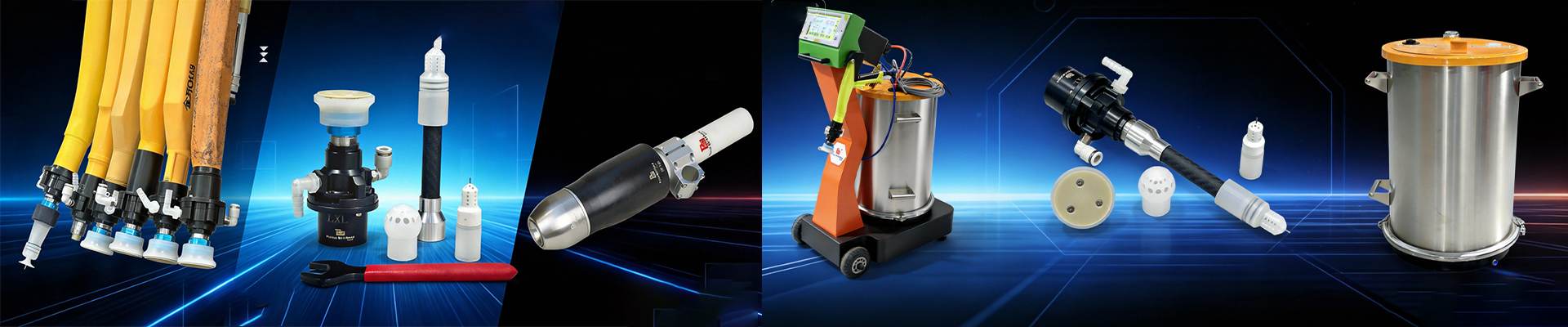
The Q7 handheld electrostatic powder coating gun uses rotary cup atomization instead of relying only on a high-velocity air stream. The rotating cup creates a soft, controlled powder cloud that can move around geometry more gently. This helps reduce the tendency for powder to blast past the target or pile up only on the outer edge.
For deep corners and recessed areas, the key advantage is powder cloud behavior. A softer, more uniform cloud gives charged particles more opportunity to drift into the recess and follow the part geometry. This is especially useful for tube joints, welded assemblies, square profiles, and metal frames where conventional guns often require touch-up spraying.
Where Q7 Fits Best
Q7 is most useful when the coating challenge is caused by part geometry rather than by powder quality alone. Good applications include:
- Tube and frame structures with repeated welded joints
- Parts with many internal corners or cavities
- Small-batch production where flexibility matters
- Fabricators trying to reduce touch-up work and rework
- Coating shops handling mixed parts with different shapes every day
For a broader guide to tube and frame coating, see our article on tube and frame powder coating for metal fabricators. To review the equipment designed for this problem, visit the Q7 handheld electrostatic powder coating gun product page.
Practical Checklist for Coating Deep Corners
When testing a deep-corner coating process, use a simple checklist before moving into production:
- Confirm part grounding before spraying
- Start with moderate voltage instead of maximum voltage
- Spray the recess before building too much film on the outer surfaces
- Inspect the deepest point with proper lighting
- Measure film thickness inside the corner
- Compare first-pass coverage against rework time and powder waste
- Use rotary cup atomization when conventional airflow cannot reach the geometry consistently
Conclusion
The Faraday cage effect is one of the main reasons deep corners, tube joints, and recessed areas are difficult to powder coat. Simply increasing voltage or powder output often creates more defects without solving the root problem. A better approach is to control the powder cloud, reduce excessive airflow, and use equipment that can help charged powder reach complex geometry more naturally.
If your shop struggles with bare spots, thin film build, or repeated rework in deep corners, QXD Coating can help evaluate the part geometry and recommend a practical coating approach. Contact us for a technical consultation or sample spray test.