
Powder Coating Welded Tube Frames: Common Coverage Problems and Fixes
Welded tube frames look simple from a distance, but they are rarely simple to powder coat. A frame may have long straight tubes, sharp outside edges, welded joints, gussets, tabs, brackets, and boxed corners all on the same part. These geometry changes can make powder build quickly on open surfaces while leaving thin film, rough texture, or bare spots around the welds and inside corners.

For metal fabricators, furniture makers, automotive frame shops, equipment builders, and coating job shops, these defects create rework. The part often needs touch-up spraying, extra curing time, or complete stripping when the coating fails inspection. The goal is not only to cover the frame, but to cover it consistently without wasting powder or slowing the line.
Why welded tube frames are difficult to powder coat
Powder coating works best when the powder cloud, air movement, grounding, and electrostatic field all support the shape of the part. Welded tube frames challenge all four of these factors. The part has open faces that are easy to coat, but it also has corners where powder flow becomes unstable and charged powder particles are less willing to enter.
The hardest areas usually include:
- Tube intersections where two or more tubes meet at a welded joint.
- Inside corners between a tube and a plate, gusset, bracket, or crossmember.
- Weld beads and heat-affected zones that create uneven surface profile.
- Boxed or recessed areas where charged powder is repelled before reaching the back of the corner.
- Sharp outside edges where film build may be too thin after curing.
These areas are also where corrosion protection often matters most. If the coating is weak around a welded joint, moisture and chemicals can attack the part at its most stressed location.
Common coverage problems on welded tube frames
1. Thin film around welded joints
Welded joints can create a small valley next to the weld bead. When the spray gun is aimed directly at the joint, powder may collect on the raised weld and nearby tube face first. The lower area beside the weld receives less powder, so the cured coating looks thinner or less uniform.
This is especially common on square tube frames, chair bases, trolley frames, machine guards, motorcycle frames, and fabricated support structures.
2. Bare spots in inside corners
Inside corners are affected by the Faraday cage effect. Charged powder tends to deposit on the front edges of the corner instead of traveling deep into the recessed area. The operator may increase voltage or spray longer, but the extra powder can build on the outside edges while the deepest part remains under-coated.
3. Heavy texture on open tube faces
When operators try to force powder into corners, the visible tube faces often receive too much powder. This can lead to orange peel, rough texture, poor appearance, and unnecessary powder consumption. A frame that looks fully covered may still have poor balance between open surfaces and hidden geometry.
4. Back ionization and edge defects
High voltage and excessive film build can create back ionization, especially when the gun is held too close or too long over the same area. The result can be pinholes, small craters, roughness, or a weak-looking finish on the areas that should be easiest to coat.
5. Rework after curing
The most expensive defect is the one found after curing. Once a welded frame comes out of the oven, missed areas around tube joints or brackets are difficult to repair cleanly. Rework increases labor, powder use, oven time, and delivery risk.
Practical fixes for better tube frame powder coating
Improve grounding before adjusting the gun
Grounding should be checked before changing spray settings. Poor grounding makes powder attraction unstable, and it can make operators compensate with more powder or higher voltage. Make sure hooks, contact points, racks, and frame surfaces are clean enough to provide a reliable electrical path.
For welded frames, pay attention to the contact point. A heavy frame with paint, oxide, oil, or scale at the hanging point may not ground as well as expected. Clean metal-to-metal contact is a small detail, but it has a large effect on coating repeatability.
Spray difficult joints before open surfaces
Many coating teams get better results by coating the hardest geometry first. Spray the tube intersections, brackets, internal corners, and welded joints before covering the long open tube faces. This gives the operator a chance to reach recessed areas before the front edges collect too much powder.
A useful order is:
- Inspect and ground the frame.
- Spray welded joints and inside corners with controlled powder output.
- Coat brackets, tabs, and boxed sections.
- Finish the long tube faces and outside edges.
- Check film build in both visible and hidden areas before curing.
Use lower, more controlled output near recessed areas
More powder is not always the answer. For tube joints and internal corners, a softer powder cloud can help reduce bounce-back and edge build-up. Lower powder output, suitable air settings, and a consistent gun distance give the powder a better chance to enter the difficult area instead of piling up on the closest surface.
When using an electrostatic powder coating gun, operators should avoid treating every part of the frame the same way. Open tube faces can accept a normal pass, while joints and corners may need a slower, more controlled approach.
Adjust voltage for the geometry
High voltage can help attract powder to open surfaces, but it can also strengthen the Faraday cage effect in recessed areas. For welded tube frames with many inside corners, reducing voltage near difficult joints may improve penetration and reduce edge overload.
The best setting depends on powder type, part size, grounding, gun design, and operator technique. The practical rule is simple: if powder builds on the front edge but refuses to enter the corner, do not only spray longer. Adjust the electrostatic and airflow conditions around that geometry.
Use the right spray angle
Directly attacking a welded corner from one angle often creates uneven coverage. It is better to approach the joint from multiple angles with shorter passes. The gun should help the powder wrap around the geometry, not drive powder into one face until the surrounding surfaces become overloaded.
For square tube frames, rotate the part or change the spray direction so that the gun can reach both sides of the tube intersection. If the frame is fixed on a conveyor, operators may need a planned spray sequence for each side.
Where rotary cup powder coating helps
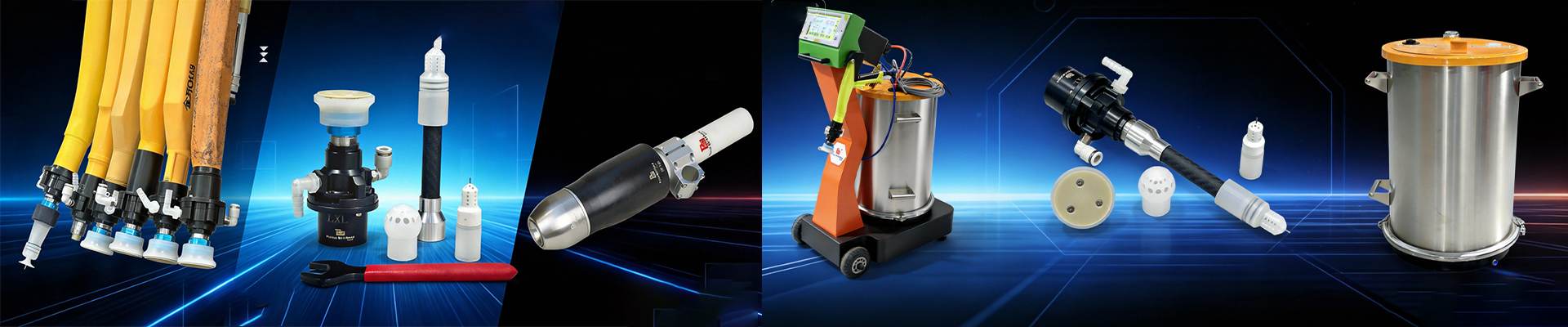
Rotary cup powder coating can be useful for welded tube frames because it produces a softer, more uniform powder cloud than many conventional spray patterns. For complex parts, this can improve powder distribution around corners, tube joints, and irregular surfaces.
A small rotary cup or rotary-style powder gun is not a magic fix for poor grounding or bad part preparation. However, when the basic process is controlled, it can help operators reduce heavy edge build-up and improve coverage balance across the whole frame.
For coating shops that frequently handle welded steel frames, carts, guards, racks, railings, or machinery structures, the main benefit is process stability. A more controlled powder cloud can make it easier to repeat the same result from one frame to the next.
Surface preparation still matters
Many coverage complaints are actually preparation problems. Weld spatter, sharp burrs, oil, oxide, and uneven grinding marks can all affect how the coating looks after curing. Before spraying, the frame should be cleaned and prepared according to the material, corrosion requirements, and powder supplier recommendations.
Important checks include:
- Remove weld spatter and sharp burrs that can create weak coating points.
- Clean oil, cutting fluid, and handling contamination from the tube surface.
- Check whether welded areas need extra attention before pretreatment.
- Make sure hanging points do not block critical coating areas.
- Confirm that the frame is dry before powder application.
How to reduce rework on welded frame coating jobs
The best way to reduce rework is to make difficult areas part of the standard process, not an afterthought. Operators should know which joints are most likely to be missed, and quality checks should include those points before the frame enters the oven.
For repeated products, create a simple spray map. Mark the high-risk corners, recommended gun angle, approximate distance, and sequence. This is especially helpful when several operators coat the same frame design across different shifts.
When to review your powder coating gun setup
If the same welded frame defects appear again and again, the issue may not be operator skill alone. It may be time to review the powder coating gun, powder output control, electrostatic settings, and spray pattern. A gun that works well on flat panels may not be the best choice for frames with many joints and recessed areas.
For QXD and Paint Brothers customers, the Q7 powder coating gun is often considered when shops need better control on complex metal parts, tube frames, internal corners, and welded assemblies. The right setup should help operators coat difficult geometry with less guesswork and fewer repair passes.
Key takeaways
- Welded tube frames fail most often around joints, inside corners, weld beads, brackets, and sharp edges.
- Good grounding and surface preparation should be checked before changing spray settings.
- Spray difficult geometry first, then finish open tube faces.
- Lower powder output and adjusted voltage can improve penetration into recessed areas.
- Rotary cup powder coating can help create a more controlled powder cloud for complex frames.
- A repeatable spray sequence is one of the best ways to reduce rework.
If your shop is coating welded tube frames, racks, railings, carts, or machinery structures and still fighting thin coverage around joints, QXD Coating can help review the part geometry and recommend a more suitable powder coating gun setup. Contact us for a technical consultation or a sample spray test based on your frame design.